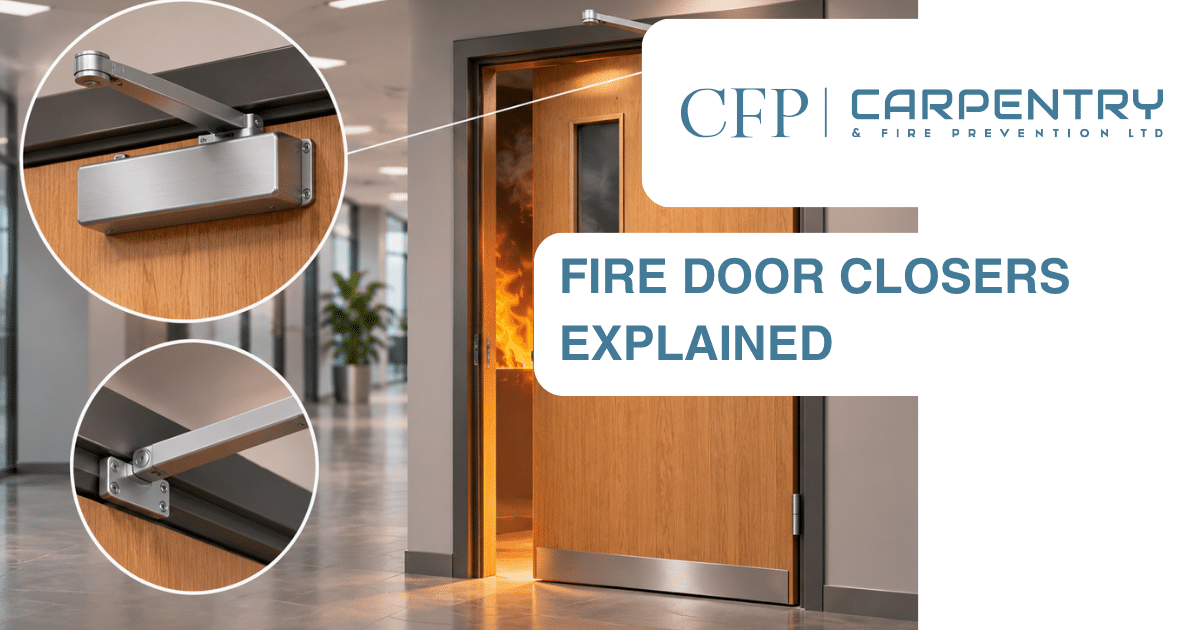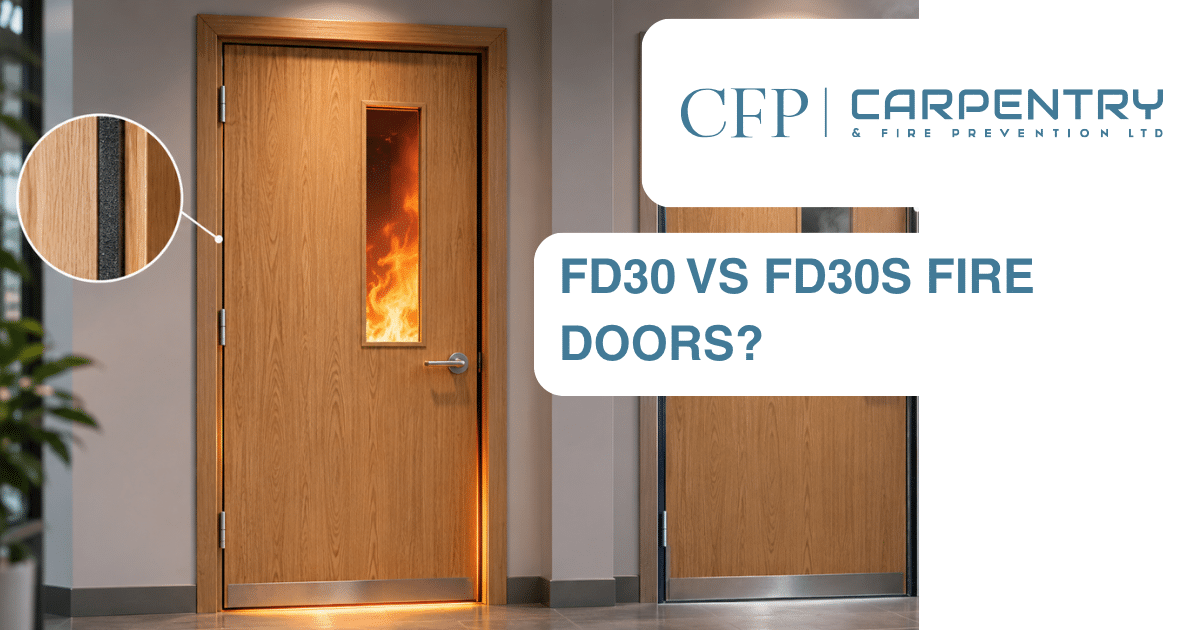


Warehouses and distribution centres face unique fire safety challenges due to their large volumes, high ceilings, storage density, and often unmanned zones. That’s why choosing the right fire doors—and ensuring they meet current regulations—is critical for both compliance and protection.
Whether you’re fitting out a new industrial unit or upgrading an existing space, this guide covers the essentials: fire door types for warehouses, relevant UK legislation, and best practices for safety and legal compliance.

The Role of Fire Doors in Warehouses
Fire doors are a key component of a warehouse’s passive fire protection strategy. Their main job is to contain fire and smoke, protect evacuation routes, and prevent the spread of flames between zones—especially in large open-plan layouts or between areas with different fire risks (e.g. storage vs office).
Unlike in domestic or small commercial settings, warehouse fire doors often serve larger structural openings, such as loading bays, compartment walls, mezzanines, or fire escapes.
Types of Fire Doors for Warehouses

Depending on the layout, use, and fire strategy of the building, different fire door types may be used:
1. Steel Personnel Fire Doors
These are FD30 or FD60 rated pedestrian doors typically used for office access, stairwells, plant rooms, and internal compartmentation. They’re durable, tamper-resistant, and often used in high-traffic industrial settings.
2. Fire-Rated Roller Shutter Doors
Essential for loading bays and large openings, these shutters roll down automatically when triggered by a fire alarm or fusible link. They’re rated from 60 minutes up to 240 minutes and must be tested to BS EN 16034.
3. Sliding Fire Doors
Used where roller shutters aren’t practical, sliding fire doors are hung on top tracks and close manually or under gravity when released. They’re ideal for wide internal openings and allow daily use without full automation.
4. Emergency Fire Exit Doors
Every warehouse needs designated fire exits, clearly signed and accessible. These are often steel single or double doors with push bars or push pads for quick escape. While not always fire-rated, they must meet exit route and locking regulations.

Fire Door Compliance and Legal Requirements
In the UK, warehouse fire door compliance is covered under several pieces of legislation:
The Regulatory Reform (Fire Safety) Order 2005
Warehouse owners, operators, or tenants are considered the “Responsible Person” and must ensure all fire doors are:
- Compliant with their fire strategy and risk assessment
- Maintained in efficient working order
- Clearly marked, accessible, and unobstructed
Building Regulations – Approved Document B
This sets out where fire doors must be installed and what level of fire resistance is required. For example:
- FD60 or FD120 doors between compartments
- Fire-rated doors around escape routes
- Shutters or barriers between high-risk areas like flammable goods storage
BS Standards for Fire Doors
Warehouse fire doors should comply with:
- BS 476 Part 22 or BS EN 1634-1 (fire resistance testing)
- BS EN 16034 for fire-resistant industrial doors and shutters
- CE marking and third-party certification where applicable
Failing to comply with these standards can lead to:
- Fines and enforcement notices
- Voided insurance in the event of a fire
- Risk to staff and assets
Maintenance and Inspections
Fire doors in industrial settings must be inspected regularly, ideally:
- Monthly visual checks for damage, alignment, seals, and signage
- Annual professional inspections (especially for shutters or automated doors)
- Service logs and maintenance records kept for auditing
Fire-rated shutters should also undergo drop tests and motor function tests, as many rely on gravity fall or electrical control systems.
Choosing the Right Solution
When specifying fire doors for a warehouse, consider:
- The size and frequency of use (manual vs motorised)
- Whether the door forms part of a fire compartment or protected route
- The fire load and use of adjacent areas
- Requirements for panic exit hardware
- Ease of maintenance and access for inspections
Working with a qualified fire door installer ensures correct fitting, compliant hardware, and appropriate fire stopping around door frames.
We Supply and Install Warehouse Fire Doors
At CFP Carpentry & Fire Prevention, we work with warehouse owners and operators across Dorset, Hampshire, and the South to install:
- Steel fire doors with FD60 or FD120 ratings
- Fire-rated roller shutters for industrial openings
- Fire exit doors with panic escape hardware
- Fire door inspections, surveys, and remedial works
We use only certified fire door products, installed by qualified professionals and documented to satisfy insurers and fire authorities.
Need Warehouse Fire Doors?
Contact CFP Carpentry & Fire Prevention for a free consultation or fire door survey. We’ll ensure your warehouse is safe, compliant, and fully protected.