

Fire Safety in Gyms – Why It Matters: Gyms and leisure centres are bustling, high-occupancy environments – the UK has over 11.5 million gym members (about 1 in 6 adults) and more than 5,600 fitness clubs nationwide. With hundreds of millions of visits to gyms each year, the stakes for fire safety are high. While fires in gyms are relatively rare, they do happen – an analysis found 68 fire incidents at UK leisure centres between 2010 and 2024 (fortunately with no fatalities since 2000). For gym owners and operators, compliance with fire door regulations isn’t just a legal tick-box – it’s essential to protect lives in these unique settings. Below, we’ll break down the key challenges and responsibilities for gym fire safety in the UK, with a focus on fire doors as critical life-saving fixtures.
Unique Fire Safety Challenges in a Gym
Gyms present several distinct fire safety challenges that set them apart from offices or other businesses. Understanding these can help the Responsible Person (defined later) tailor an effective fire strategy:
High Occupancy

Gyms often contain large numbers of people – especially at peak times or during classes – many of whom may be unfamiliar with the building’s layout. High occupancy means evacuation routes must be ample, clearly marked, and unobstructed to handle a quick exit for everyone. Fire doors and exits need to accommodate this load and work perfectly on demand. In a fire scenario, every second counts: a crowd of panicked people needs wide, unblocked exits and doors that fully self-close to compartmentalise smoke and flames. The sheer headcount puts immense pressure on fire doors to perform correctly in preventing bottlenecks and keeping escape paths tenable.
Obstruction Risk
Gym spaces are filled with equipment and personal items – free weights, exercise mats, medicine balls, gym bags, etc. It’s all too easy for these items to be improperly stored or accidentally left in aisles and doorways. A misplaced dumbbell or yoga mat can literally become an obstacle to escape or even prop a fire door open. Indeed, any of these can end up blocking or wedging a fire door open if carelessly placed. Staff should enforce a “clean as you go” policy: keep fire exits and approach corridors clear of equipment at all times. Regular floor checks should remove any tripping hazards or objects that could prevent a fire door from closing. Remember, fire doors save lives only when closed – an obstructed or wedged door fails its life-saving purpose.
Changing Rooms and Showers
Locker rooms, showers, and saunas introduce their own fire safety quirks. These areas have high humidity and steam, which can affect fire protection systems. For one, excess humidity can cause wooden fire door components to swell or warp, potentially compromising the critical gap between door and frame. If the door no longer fits its frame properly, it may not seal smoke as designed. Additionally, steam from showers or hair dryers can trigger false alarms if detectors are not appropriately installed (often, heat detectors are used in steamy areas to avoid this). People using showers may not hear alarms clearly, so alarm sounders and flashing beacons should be installed in changing areas to alert those who might have water in their ears or be otherwise distracted. Gym management must account for these factors in maintenance – e.g. frequently checking that door seals and gaps in humid areas remain within spec and that ventilation prevents moisture buildup on detectors.
High Wear and Tear
Few doors in a commercial setting get as much abuse as those in a busy gym. Members and staff are constantly opening, letting doors swing or even slamming them, and equipment may bump or scrape them. This constant heavy use means fire doors in gyms suffer more wear-and-tear than average. Over time, hinges can loosen, seals can get damaged, and door closers can go out of adjustment. All of these issues compromise the door’s fire rating if not addressed. For example, a sagging door might not latch, or a worn seal might not block smoke. Gym owners should anticipate more frequent maintenance: inspect doors often for damage (dents, warping, loose screws) and fix issues promptly. The high-traffic nature of gyms makes robust, durable fire door hardware a must – invest in heavy-duty hinges, automatic closers, and kick plates to prolong the door’s functional life. Even so, plan for periodic repairs or replacements given the punishment these doors endure.
Electrical Equipment
Modern gyms are packed with electrical machines – treadmills, ellipticals, rowing machines – as well as sound systems, TVs, and charging stations. This abundance of electrical equipment raises the potential for an electrical fire if a device malfunctions or is improperly wired. In fact, faulty or misused electrical equipment is a leading cause of workplace fires (nearly 19% of incidents in the UK). Gyms should have a robust electrical safety regimen: all equipment should be PAT-tested (portable appliance tested) regularly, and any signs of frayed wires or overheating (burning smells, tripped breakers) must be addressed immediately. Ensure that high-wattage equipment (like saunas or HVAC systems) is on dedicated circuits to avoid overload. From a fire door perspective, a gym’s layout should provide compartmentation around areas with heavy electrical usage. As part of the passive fire strategy, fire doors help contain an electrical fire to one area. Gym owners should verify that server rooms, electrical cupboards, and any high-risk areas are enclosed with proper fire-resistant construction and doors. A robust compartmentation plan, combined with active measures like smoke detectors near electrical equipment, will mitigate the risk that a single treadmill with an electrical fault engulfs the whole gym.
The Role of the ‘Responsible Person’

Under UK law, every gym or leisure facility must designate a “Responsible Person” for fire safety – typically the owner, employer, or manager in control of the premises. The concept comes from the Regulatory Reform (Fire Safety) Order 2005 (RRFSO), which is the core fire safety legislation for all non-domestic premises in England and Wales. The Responsible Person has legal duties to keep the building safe from fire. In a gym setting, these key duties include:
Conducting a Fire Risk Assessment (FRA):
The Responsible Person must ensure a thorough, up-to-date fire risk assessment is carried out and reviewed regularly. This assessment should specifically consider gym-specific risks (high occupant load, electrical equipment, etc.) and identify necessary precautions. According to government guidance, “as the responsible person, you must carry out and regularly review a fire risk assessment of the premises” to identify what needs to be done to prevent fire or keep people safe. If you have 5 or more employees, this FRA must be documented in writing. (See the Fire Risk Assessment section below for more details.)
Implementing Appropriate Fire Safety Measures:
The Responsible Person must act on the findings of the FRA by putting in place all needed measures. This includes providing adequate means of escape (enough exits for the max occupancy, with routes kept clear), installing fire detection and alarm systems, providing firefighting equipment (extinguishers, sprinklers if appropriate), and – crucially – ensuring fire doors are installed where required and maintained. Essentially, it’s their job to create a fire-safe environment: reduce hazards where possible (e.g. control ignition sources, safely store flammables), and make sure that if a fire does start, people can be warned and evacuate quickly and safely.
Maintaining Fire Safety Equipment (Including Fire Doors): All fire protection measures must be kept in working order. Article 17 of the RRFSO 2005 explicitly requires that fire doors and escape doors are “subject to a suitable system of maintenance” and maintained in an efficient state, in working order and in good repair. In practice, this means the Responsible Person must set up regular inspections and maintenance schedules for alarms, emergency lighting, extinguishers, and fire doors (often delegating the actual work to competent technicians, but retaining overall responsibility). Fire doors in particular should never be neglected – if a door’s self-closing mechanism fails or the door warps, it will no longer provide its 30 or 60 minutes of fire resistance. (Later, we will discuss recommended inspection frequency.) The law places this duty squarely on the Responsible Person, and failure to comply can lead to enforcement notices, fines, or even prosecution if people are put at risk. Bottom line: gym owners/managers must treat fire door upkeep as a non-negotiable legal obligation, not an optional extra.
Fire Door Compliance: What to Check Regularly
Fire doors are a vital part of your gym’s passive fire protection – they compartmentalise fire and smoke, protecting escape routes and buying time for evacuation. But a fire door can only do its job if it’s in good condition and used properly. Given the high-traffic nature of gyms, regular systematic checks of all fire doors are essential. UK fire safety law doesn’t prescribe exact inspection intervals for most businesses, but it does mandate ongoing maintenance. In practice, industry best practice has emerged on what to check and how often (covered in the next section). As the Responsible Person, here are the key fire door components to monitor during routine checks:
Certification:
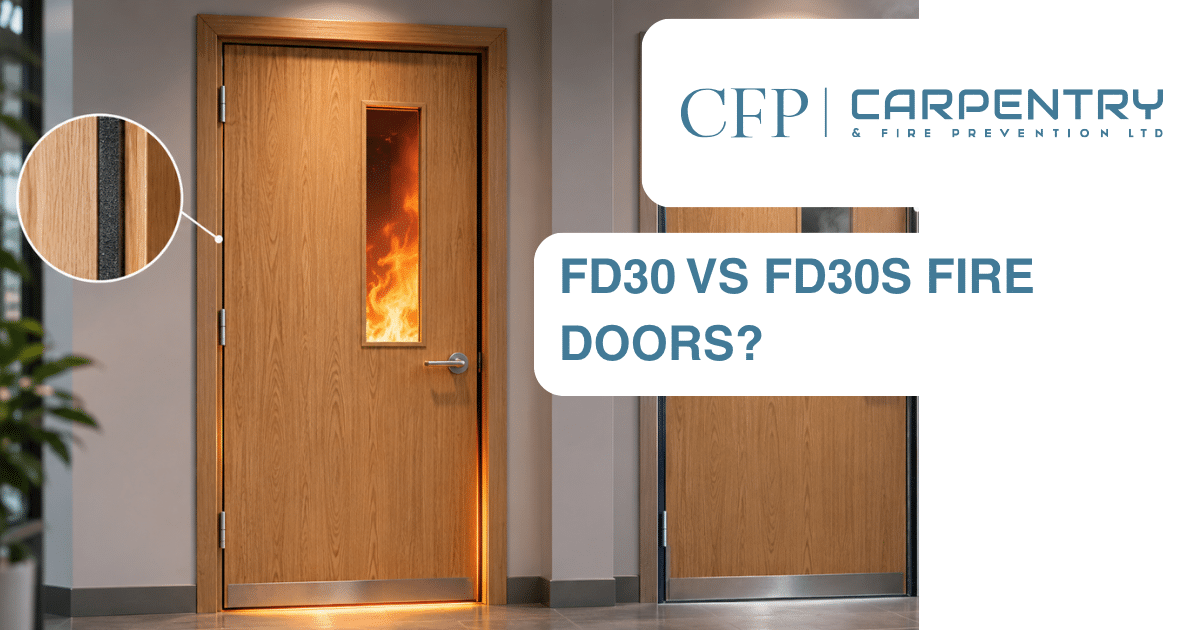
Verify that each door is actually a certified fire door. Look for the certification label or plug (usually on the top or hinge-side edge of the door) confirming its fire rating (e.g. FD30 for 30-minute fire resistance). If a door isn’t clearly marked as a fire door, you cannot assume it will hold back fire – every genuine fire door will have evidence of testing and rating. Make sure any replacements or new doors are properly certified as well.
Door Gaps:
Check the gap between the door and the frame all around. Gaps should be consistent and generally no more than ~3mm when the door is closed. (A quick trick is that 3mm is about the thickness of a £1 coin.) If you can see light through the cracks or the gap is large enough to slide your finger in, that’s a problem – excess gap means smoke and fire can pass through easily. Adjust hinges or replace seals to achieve the correct gap. Also, ensure the door isn’t rubbing or stuck (which could indicate swelling or misalignment).
Seals (Intumescent and Smoke Seals):
Fire doors have special seals around the edges. Intumescent strips (often embedded in the frame or door edge) look like thin strips and are designed to swell up with heat, sealing the gap if a fire occurs. Smoke seals (often brush or rubber blade type) are usually combined with the intumescent or in the door edge to stop cold smoke from seeping through. Ensure these seals are present, continuous, and undamaged. No bits missing or signs of wear. If paint or dirt is clogging a seal, or if someone removed a strip for some reason, it must be fixed immediately. These seals are vital for stopping deadly smoke – even a small gap can let smoke through and make an escape route unusable.
Hinges:

Fire doors take a lot of weight and abuse, so they require robust hinges (usually minimum three hinges on a door). Check that all hinges are secure with all screws tight and in place. The screws should be the correct type (often fire-rated screws) – no cheap replacements. The hinges themselves must be fire-rated hinges in good condition (no broken pins or excessive wear). A loose or failing hinge can cause the door to sag, creating gaps or preventing proper closing. Also, be sure nothing is added to the hinges that shouldn’t be (for example, removal of the self-closing spring hinge tension without replacement).
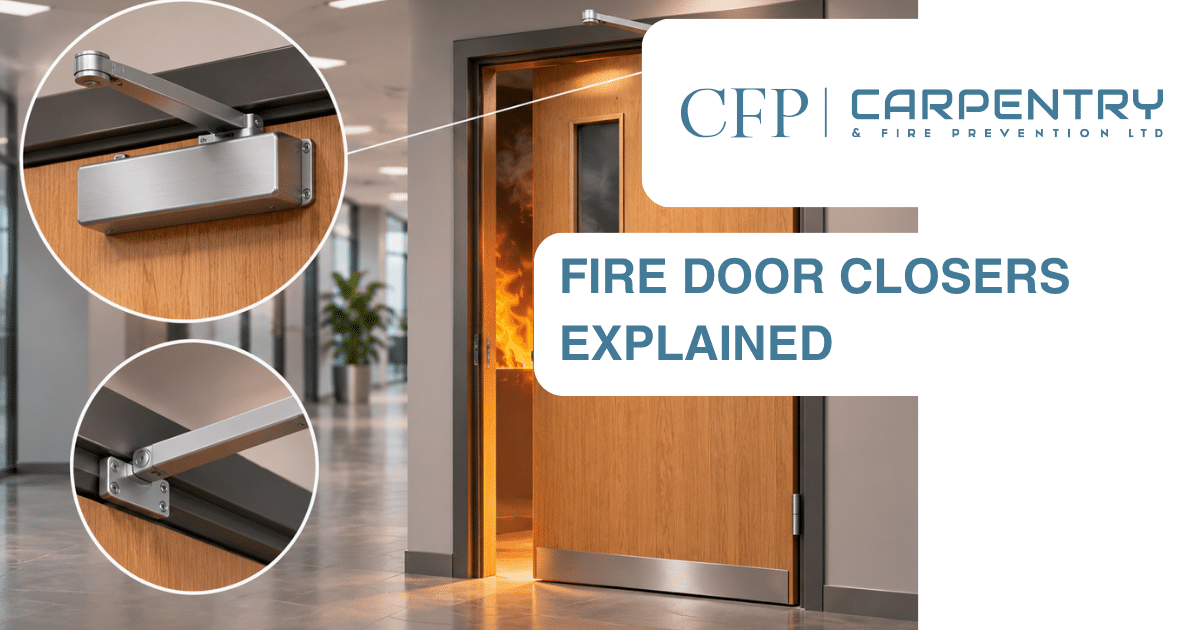
Closer:
The self-closing device is arguably the single most critical component of a fire door in a gym environment. It ensures the door will automatically close and latch every time, so the door isn’t accidentally left open. Test the door closer regularly: open the door about halfway and let it swing shut by itself – it should close firmly into the frame, overcoming any latch, from any open position. If it’s slamming too hard or not latching fully, it may need adjustment or repair. In a gym, door closers can get a workout themselves (people push doors open hard, or even hang things on them), so check for oil leaks, broken arms, or loose mounting screws. A fire door that doesn’t reliably shut flush is a disaster waiting to happen. Make sure also that nothing is obstructing the door’s swing (no doorstop wedges or mats catching under the door).
In addition to the above “5-point check”, ensure required signage is in place: any fire door that is meant to be kept closed should have a blue circular “FIRE DOOR KEEP SHUT” sign on both sides. And if a fire door is an exit route, it should have a green “Fire Exit” sign with a running man and arrow, so people know where to go. Signage might seem minor, but clear signs both remind users of proper door use and guide evacuations in a panic.

Preventing Wedging Open – A Gym-Specific Challenge
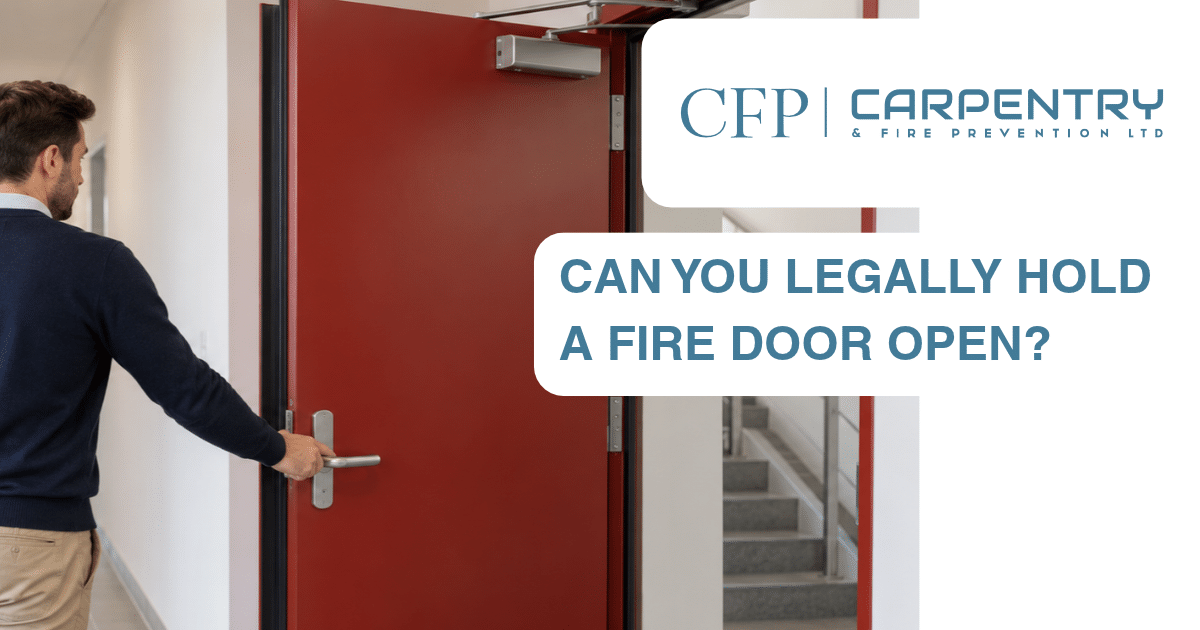
One of the biggest challenges in gyms is preventing fire doors from being wedged open. We get it – in a busy gym, a heavy fire door can feel inconvenient. Staff or members might prop doors open to move equipment, to let in air on a hot day, or simply for ease of access between areas. In fact, gym staff have been known to use everything from door wedges to heavy dumbbells to hold doors open! However, **wedging open a fire door is both illegal and extremely dangerous. A fire door left ajar cannot do its job in a fire, allowing smoke and flames to spread rapidly – akin to “wearing a raincoat with a huge hole” in a storm. Under UK fire regulations, propping open fire doors without an approved hold-open device is prohibited – it can lead to enforcement action, hefty fines or even jail for serious breaches.

Why is wedging so bad?
First, it defeats the whole purpose of a fire door. Fire doors are designed to compartmentalize fire; if they’re open, fire and smoke will rush through the building unimpeded, endangering everyone. Smoke travels even faster than fire, so an open door can quickly make escape routes impassable by filling hallways with toxic smoke. Second, an open door can create a “chimney effect”, where a stairwell or corridor acts like a flue, drawing smoke upward and cutting off upper floors. Many tragic fire outcomes (in various buildings globally) have been due to fire doors being left open or disabled.
Gym owners must institute strict anti-wedging policies:
Make it clear to all staff (and even members) that fire doors must remain closed. Post signs, do regular patrols, and promptly remove any ad-hoc wedges (yes, even if it’s a 20kg plate being used to hold the door). Train cleaning and maintenance staff not to leave fire doors propped open while working. Importantly, if ventilation or convenience is an issue, invest in legal solutions rather than illicit wedges. The only legal way to hold a fire door open is to use an approved automatic release device – for example, an acoustic door retainer or electromagnetic hold-open linked to the fire alarm. These devices can hold the door open under normal conditions, but they will instantly release the door to close when the fire alarm sounds (or if the power cuts). Acoustic retainers listen for the alarm sound, while magnetic holders are wired to the alarm system – both are effective and compliant. Installing such devices can give you the airflow or convenience you want day-to-day without compromising safety.
Another useful deterrent is fitting alarmed emergency door guards on seldom-used exits. These are inexpensive gadgets that emit a loud alarm (often ~95 decibels) if a protected fire exit door is opened without authorization. The piercing sound alerts staff and usually prompts whoever opened the door to let it shut again quickly. While these devices are more about security/unwanted entry, they also discourage propping the door open (as the alarm will continuously sound). For gyms, an alarmed exit door can prevent members from sneaking in/out through fire exits and ensure doors aren’t left ajar inadvertently. Just remember: any alarmed fire exit must still allow immediate egress in an emergency – these devices are designed to not impede opening (they alarm instead of barring the door).
Bottom line: Never wedge open a fire door at your gym. It’s not worth the convenience. Keep them shut or use proper hold-open systems that will close during a fire. This single rule can literally save lives. Managers should reinforce this constantly, as wedging is often seen as a “shortcut” in gyms – one that could turn deadly in a fire.
Maintenance and Inspection Frequency
Fire door maintenance is not a one-and-done task – it’s an ongoing process. The law (RRFSO) requires a “suitable system of maintenance”, but what does that mean in practice for a busy gym or leisure centre? Essentially, you should follow a tiered inspection schedule to catch issues early and ensure compliance. Industry guidance in the UK suggests the following frequencies:

Daily Visual Checks:
Train your staff (e.g. the opening/closing manager or a designated fire marshal) to do quick daily checks of all fire doors. This is a simple scan: make sure nothing is wedged open, nothing looks obviously damaged or obstructed, and that exit routes are clear. For example, each morning, a staff member might walk the gym floor and verify that “Fire Door Keep Shut” signs are in place, doors close properly, and no equipment or boxes are blocking doors. These daily inspections using the basic 5-point checklist can spot immediate problems (like someone left a door wedged overnight, or a hinge pin has fallen out) so they can be fixed before the gym fills up.
Monthly to Quarterly Checks:
In a high-wear environment like a gym, you may choose to do more in-depth checks every month or every few weeks, especially for the busiest doors. While not mandated by law, it’s good practice to periodically measure door gaps, test every door closer, and inspect seals in detail on a more frequent basis than the formal 6-month interval (described next) if usage is very high. The British Woodworking Federation recommends adjusting the frequency based on usage: “where the fire door is in high use, it should be checked more frequently… e.g. once per week/month”. A newly built or refurbished gym might need extra checks in the first year as doors “bed in” and could shift.
6-Monthly Formal Inspections:
It is widely recommended (and many companies make it policy) that every fire door is inspected at least every six months by a competent person, like us at CFP. For a gym, this could be the Responsible Person themselves if trained, a facilities manager, or an external fire door inspector.
This inspection should be documented (keep records of findings and any repairs made). It will involve a thorough check of all the items in the 5-point list: certification, gaps (perhaps using gauges to confirm ~3mm gaps), seals (integrity and fire rating), hinges (check all screws, oil if needed, confirm they’re fire-grade hinges), closers (adjust speed if slamming or not latching), and general door condition. Any defects must be fixed – e.g. if an intumescent strip is damaged, replace it; if a closer isn’t working, repair or swap it out.
Six months is a general rule – if your gym has relatively light traffic and doors are in pristine condition, you might stretch to annual; if your gym is 24/7 and doors take a beating, do not hesitate to inspect quarterly. But every six months is a sensible default in a gym.
Annual Professional Audit: At least once a year, consider bringing in a professional fire door inspector (certified under e.g. FDIS or NAFDI in the UK) for a full audit. This external check provides extra assurance – these experts often catch subtle issues others might miss (like slight frame distortions or improper intumescent specifications). An annual third-party inspection isn’t explicitly required by law for gyms, but it’s highly recommended, especially in facilities open to the public. It also looks good to enforcement authorities if you have reports showing you invested in professional safety checks. The inspector will give you a report and recommended actions to keep you in top compliance.
In addition to door-specific checks, maintain all your fire safety systems on schedule: e.g. fire alarms and detectors should be tested weekly and serviced at least twice a year by an alarm engineer; emergency lighting should be function-tested monthly and have an annual full discharge test; fire extinguishers require an annual service by a qualified technician, etc. Keep a fire log book documenting all these checks and any fixes – this not only helps you stay on top of things but is evidence of compliance if the Fire Brigade or HSE ever inspect you.
Lastly, any maintenance or installation work on fire doors must be done by competent, trained people. Don’t DIY a fire door fix unless you really know what you’re doing – improper repairs can invalidate the door’s fire rating. Use certified fire door installers/maintainers for significant work to ensure the door’s integrity remains intact.
Fire Risk Assessment

Every gym in the UK is required to have a current Fire Risk Assessment (FRA). As noted earlier, this is a legal duty for the Responsible Person under the Fire Safety Order. But beyond being a checkbox, the FRA is a foundational tool to identify hazards and shape your fire safety strategy. A proper FRA for a gym or leisure centre will cover:
Identification of Fire Hazards:
What could cause a fire in your gym? Common hazards include electrical equipment (as discussed), sauna/steam rooms and their heating elements, any cafés or cooking appliances on site, storage of cleaning chemicals or combustibles (towels, paper, rubber mats), and even the building’s structure (e.g. foam padding or wall insulation that’s flammable). The FRA should list all potential ignition sources and fuel sources in the facility.
People at Risk:
Consider who uses the gym – staff, members, visitors – and when and where they might be at risk. For instance, peak times have high occupancy, and people in changing rooms or swimming pools may need extra alerting. Note if you have vulnerable persons: e.g. disabled members who might need assistance, or children in a crèche, etc. Plan for how to evacuate these individuals (do you have an evac chair for upstairs? Are staff trained in helping wheelchair users?).
Evaluate, Remove, Reduce Risks:
This is the heart of the FRA – for each hazard, how can you prevent a fire, or if it happens, mitigate it? For example, to address electrical fire risk, you might implement regular PAT testing and not overload sockets. For flammable materials, ensure they’re stored properly in fire-resistant cabinets. If you identify that an exit route passes through a high-risk area (say, the only way out of a studio is through a corridor next to the sauna plant room), you might reduce risk by adding an extra exit door or upgrading fire resistance around that plant room. Fire doors are a major risk-reducer identified by FRAs – the FRA will determine where fire doors are needed (e.g. separating a staircase from the gym floor, enclosing a boiler room) and what rating they should be. Implementing those doors (and other measures like alarms, sprinklers, and training) is part of risk reduction.
Record, Plan, and Train:
If you have 5+ employees, the FRA findings must be written down. In any case, you should use it to create an Emergency Plan – basically, the documented procedures of what to do if a fire occurs. This includes evacuation procedures (routes to use, assembly point), how to call 999, who will tackle fire (if safe) or shut down music/equipment, etc. You must also inform and train staff about these plans. For example, every staff member should know which exits to direct people to, how to operate the fire alarm or call point, and how to use an extinguisher if appropriate. Conducting periodic fire drills in gyms is a bit tricky (as members won’t appreciate interruptions), but at least staff-only drills or walk-throughs should be done to keep everyone sharp on their roles. Some gyms choose a quiet time or closing hours to do a full alarm test/drill with all present.
Review and Update Regularly:
A gym’s FRA is not a one-time document. It should be reviewed at least annually or whenever significant changes occur – e.g. if you renovate, add a new sauna, change the layout of equipment, or even after any fire incident or false alarm trends. Also, update it if membership usage patterns change (for instance, you start 24-hour operations). The Responsible Person should revisit the FRA and ensure it remains valid and all action items are completed.
In summary, the FRA is your roadmap to compliance. It identifies where you need fire doors, alarms, signs, training, etc., and it is the document an inspector will ask to see first. Keep your FRA updated and on-site, and use it actively to drive safety improvements. It’s not meant to gather dust – it’s meant to be a living assessment that truly reflects how fire safety is managed in your gym.
Fire Safety Measures in Gyms
Fire safety in a gym environment is a combination of passive measures (like fire doors, fire-resisting construction) and active measures (like alarms, sprinklers, extinguishers), plus well-trained staff and clear procedures. Ensuring compliance with fire door regulations is one big piece of the puzzle – but it’s important to address all other required fire safety measures as well. Here’s a quick rundown of key fire safety measures for gyms and leisure centres (in line with UK regulations and best practices):
Fire Detection & Alarm Systems:
Gyms must have an appropriate automatic fire detection and warning system. Typically, this means smoke or heat detectors in various areas and audible alarm sounders throughout the facility. Crucially, the alarm must be loud enough to be heard over music and noise in all parts of the gym. Consider that many gym users wear headphones – utilising visual alarm indicators like flashing strobe lights can help alert those who may not hear the siren. In areas like pools or steam rooms, ensure alarms (and flashing beacons) are installed and can be noticed by people who might not hear well. Modern alarm panels can have zoned evacuation (if your gym is large, you might evacuate certain areas first) and should be linked to any hold-open devices on fire doors (so they release upon alarm). Test your alarm weekly and service it at least twice a year.
Fire Extinguishers and Firefighting Equipment:
Provide the correct types of fire extinguishers at suitable locations, and maintain them annually. Typical gyms will need CO₂ extinguishers near electrical equipment and perhaps water or foam extinguishers for general combustibles. If there’s a cafe or kitchen, a wet chemical extinguisher and a fire blanket are needed for cooking oil fires. Staff should be trained on basic extinguisher use, but emphasise that their priority is evacuation, not firefighting, unless the fire is very small and they are confident. Large sports complexes may also have internal fire hose reels or hydrants for use by trained personnel or firefighters, but in most gyms, standard extinguishers will suffice.
Emergency Lighting:

In a fire, it’s common to lose normal lighting (either due to electrical faults or deliberately shutting off power). Emergency lighting must be installed to illuminate all escape routes, exits, and assembly points if the power fails. This includes illuminated green exit signs above doors and lights along corridors, stairs, and in the gym areas as needed, so people aren’t in the dark. For a windowless studio or basement free-weights area, ensure there are enough emergency lights to see the way out if the regular lights cut off. Test emergency lights monthly (briefly) and do a full-duration test yearly.
Sprinkler or Suppression Systems:
While not explicitly required in every gym, sprinkler systems are highly effective and may be mandated for larger leisure centres or those above a certain size. Sprinklers can control or even extinguish a fire automatically, which is especially valuable in areas that might not be immediately observed (like a storage room or after hours). If your facility has sprinklers, ensure they are inspected and tested as required (usually every year by specialists, with interim checks). Never obstruct sprinkler heads (e.g. don’t stack storage too close to them). Additionally, if you have any special suppression systems (like in server rooms or kitchens – e.g. an Ansul system in a kitchen hood), maintain those per regulations.
Evacuation Routes and Signage:
Mark out clear escape routes from every part of the gym. People should be able to spot an exit sign from anywhere in the gym, even if unfamiliar with the layout. Fire exit signage (green running man signs with arrows) should indicate the direction toward exits. If your gym has a complex layout (multiple corridors, etc.), a simple evacuation map posted in key areas (entry, near lockers) can help users get familiar with ways out. Keep routes free of obstructions (no equipment storage in hallways, as mentioned). Final exit doors (leading outside) should be easily openable – usually via push bar or push pad mechanisms – and kept unlocked whenever the building is occupied.

If you use a magnetic lock or access control on an exit door for security, it must fail-safe (release) on fire alarm activation to let people out. Post signs by those doors if they are alarmed or have a delay, so people know how to operate them in an emergency. Good signage and well-thought-out routes are critical because many gym users will not have drilled an evacuation like employees do – they’ll rely on signs and staff instructions.
Staff Training and Fire Drills:
All gym staff and instructors should receive basic fire safety training relevant to your facility. This includes understanding the evacuation plan, knowing the location of all exits and assembly points, how to trigger the alarm (and reset if a false alarm), and how to assist members in evacuating. Assign certain staff as fire wardens or marshals for each shift – they will have duties like sweeping an area to ensure everyone is out, or checking toilets and back rooms, and then reporting to the person in charge that their zone is clear. Conduct periodic fire drills – even if you can’t drill with customers, do it with staff so they are practised. In a real fire, gym users will look to staff for guidance – staff should confidently direct people to “leave belongings, this way out,” etc. Also, brief staff on specific scenarios: e.g. what if a fire is in the reception area blocking the main entrance? Which secondary exit do they guide people to? Preparation is key. Furthermore, ensure everyone (including personal trainers, cleaning crew, any tenants like a physio or cafe operator) knows the sound of the alarm and the procedures. As part of training, emphasise not to ignore alarms or assume it’s false – gyms can be prone to complacency (“oh, someone probably hit the alarm by accident”). Every alarm must be treated seriously and investigated or responded to immediately.
General Housekeeping and Prevention:
Lastly, incorporate fire safety into daily operations. This means controlling any build-up of flammable materials (don’t let trash like cardboard or paper accumulate; empty bins daily), storing cleaning chemicals or spare paper products in closed cabinets away from ignition sources, enforcing a no-smoking policy except in designated safe areas outside (if applicable), and checking that fire-resisting doors (and walls/ceilings) aren’t compromised. For example, if you run cables or pipes through walls, the openings should be properly fire-stopped – small holes can let fire/smoke spread. If contractors do work, supervise that they don’t damage fire doors or walls (and if they do, they must repair firestopping). Before and after large events or peak periods, do a walkthrough to ensure all safety features are in place (doors shut, exits clear, alarms operational). Prevention also includes monitoring of high-risk areas – e.g. have staff periodically check the sauna or steam room area, as those can overheat if there’s a malfunction. Implement a system for regular maintenance of equipment so that, for instance, a treadmill that’s overheating gets fixed before it catches fire. By embedding these practices, you greatly lower the chance of a fire starting at all.
In summary, compliance with fire door regulations in gyms goes hand-in-hand with a broader fire safety strategy. Gyms and leisure centres face unique challenges – high occupancy, high energy, many potential hazards – but with proper planning and vigilance, they can be operated safely. Always remember that fire doors are a passive safeguard that only work if they’re in good shape and used correctly. Combine that with robust active measures (alarms, lighting, sprinklers) and well-trained staff, and you create a strong defense against fire. As the Responsible Person, make fire safety a priority equal to member experience – after all, protecting your patrons’ lives is the ultimate service you provide. Stay proactive, keep up with inspections and training, and never let complacency undermine safety. Gym-goers trust you not just with their fitness, but with their wellbeing in an emergency – so ensure your fire doors (and all fire precautions) will perform when it counts.