

When you buy a flat, you probably check the lease length, service charge, EWS1 paperwork and condition of the building. But one important issue often gets overlooked: the entrance door.
If your flat opens onto a communal hallway, lobby or stairwell, the front door forms part of the building’s fire protection. It helps contain fire and smoke inside the flat where a fire starts and protects the shared escape route for everyone else.
Since the Fire Safety (England) Regulations 2022 came into force in January 2023, flat entrance doors have come under greater scrutiny. For buyers, a defective or unsuitable door can lead to unexpected repair costs, replacement work or disputes over who should pay.
Before you exchange contracts, check both the door and the paperwork behind it. This guide explains what to look for, which warning signs matter and what to ask before you commit.
Why the Front Door Matters
Blocks of flats rely on compartmentation, which helps contain fire and smoke within one part of the building for a period of time. The entrance door forms one of the most vulnerable points because people open, close, alter and damage it every day.
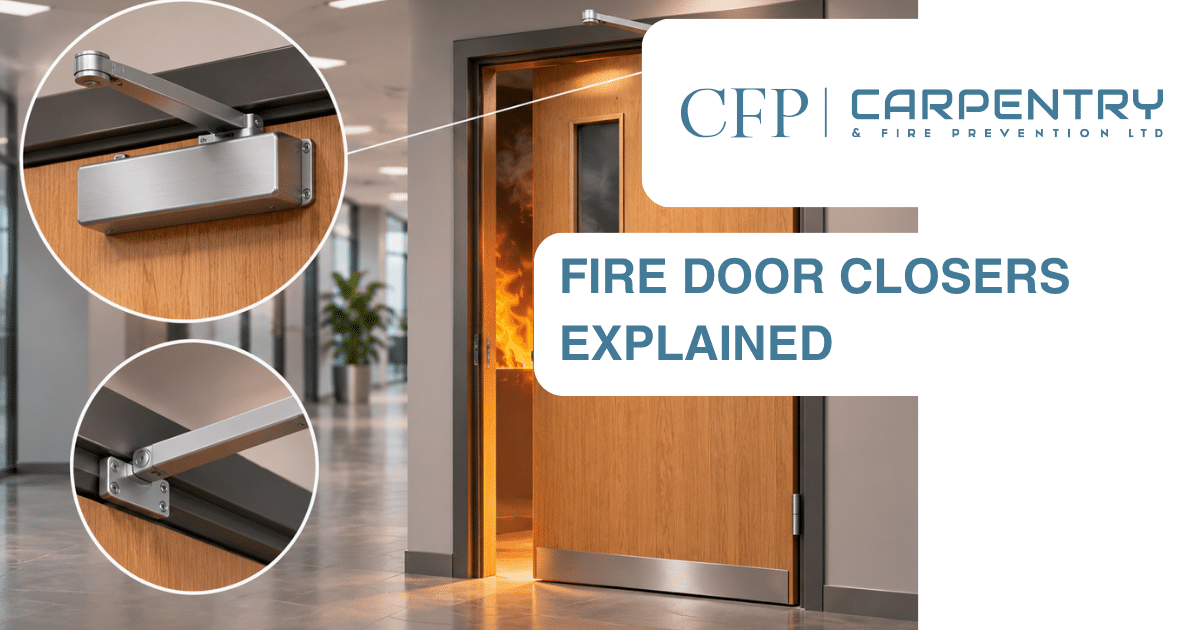
A fire door also contains hinges, seals, locks, letterplates and a self-closing device, all of which affect how it performs. If the door fails, smoke and fire can spread into the communal hallway or stairwell and compromise the escape route.
That is why a door that simply looks solid is not enough.


What Should a Compliant Flat Entrance Door Have?
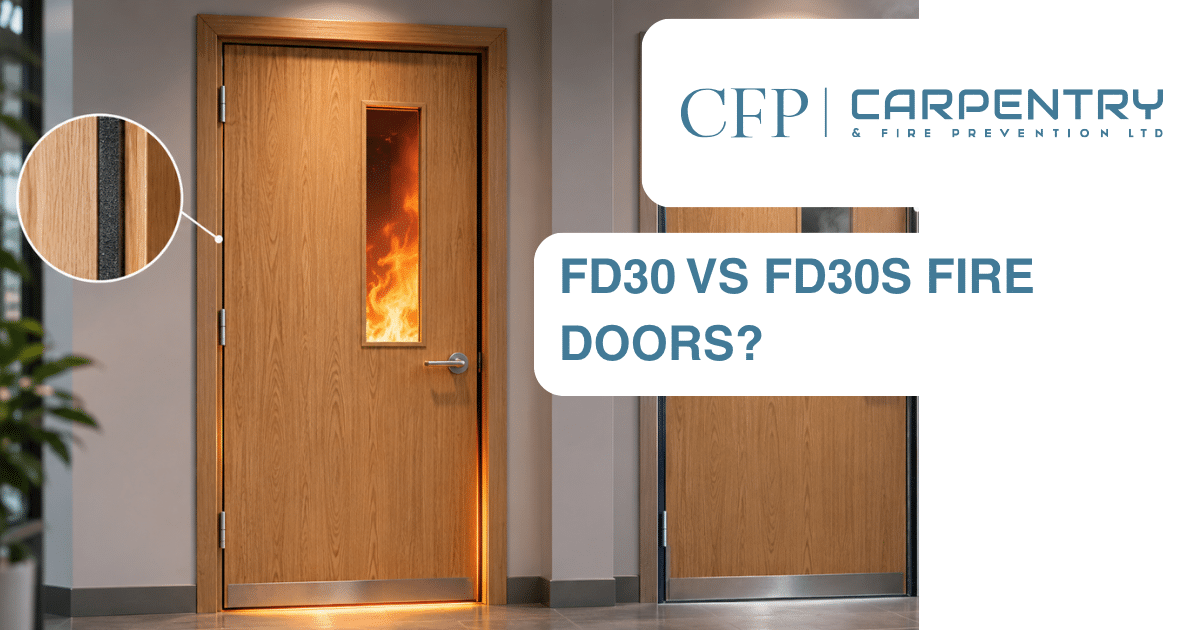
For many blocks, a new or replacement entrance door will need an FD30S-rated doorset. FD30 means the doorset demonstrated at least 30 minutes of fire resistance during testing, while the S refers to smoke control.
The word door set matters because certification covers more than the door leaf. The frame, hinges, seals, closer and other hardware all need to work together correctly.
Older buildings may still contain nominal fire doors without modern certification. That does not automatically make them unsafe, but a competent assessor needs to decide whether they remain suitable.
What Can You Check During a Viewing?
You cannot confirm full compliance during a short viewing, but you can spot several common warning signs.
- Check the top and hinge edges for a certification label, plug or manufacturer marking.
- Open the door and let it close by itself. It should shut fully and latch without help.
- Look at the intumescent and smoke seals for missing sections, damage or heavy paint.
- Check whether the gaps around the door look even rather than wide or irregular.
- Make sure the hinges look secure and have no obvious missing screws.
- Look for alterations such as cat flaps, replacement letterplates, extra locks or glazing.
- Check the leaf and frame for splits, dents, warping or holes from removed hardware.
If several of these issues appear, consider arranging a professional fire door survey before you exchange.
Check the Paperwork Before You Buy
The paperwork can tell you more than the door itself.
Ask your conveyancer for the latest fire risk assessment and check whether it mentions flat entrance doors, outstanding defects or planned remedial work.
If the building’s top storey sits above 11 metres, ask for the Regulation 10 fire door check records. The responsible person should check communal fire doors at least every three months and use best endeavours to check flat entrance doors every twelve months.
If someone previously replaced the door, ask for certification, installation records or product information. You should also review service charge accounts and any Section 20 notices, because they may reveal a planned replacement programme and a future cost.

Find Out Who Pays
Do not assume the leaseholder or freeholder automatically owns the entrance door. The lease decides.
Some leases make the leaseholder responsible for maintaining and replacing the door. Others keep the door or frame under the freeholder’s control and recover the cost through the service charge.
Ask your conveyancer to confirm in writing who owns the door, who must maintain it and who would pay if it needs replacing. It is much better to resolve that before exchange than after completion.
Should You Get a Fire Door Inspection Before Buying?
A separate inspection makes sense if the door looks original, has no clear certification, contains alterations, fails to close properly or comes with little inspection history.
It can also help if the building’s fire risk assessment already mentions entrance door defects or planned replacement work.
A professional inspection gives you a documented answer and helps you understand whether the door needs a minor repair or full replacement before you commit to the purchase.
Frequently Asked Questions
Does every flat need a fire door as its front door?
A flat entrance door opening onto a communal hallway, lobby or stairwell will normally need suitable fire resistance because it protects a shared escape route. Flats with their own direct entrance outside may follow different requirements.
Does a missing label mean the door is not compliant?
Not necessarily. Older nominal fire doors may have no modern certification label. A competent assessor needs to judge whether the door remains suitable.
Who pays for a non-compliant entrance door?
The lease usually determines who pays. The leaseholder may cover the cost in one building, while the freeholder may arrange the work and recover it through the service charge in another.
Should I check the door before exchanging contracts?
Yes. Checking before exchange gives you time to investigate defects, request records and identify possible replacement costs while you can still negotiate.
Need Help Checking a Flat Entrance Door?
At CFP Carpentry & Fire Prevention, we carry out fire door surveys and inspections for buyers, leaseholders, landlords, freeholders and managing agents. We can assess the entrance door, identify defects and explain whether it needs remedial work or replacement.
We also provide certified fire door installation, remedial works, fire stopping and flat entrance door replacement programmes across Bournemouth, Southampton, Poole, Exeter, Plymouth, London, Guildford, Slough, Croydon, Bristol, Swindon and Oxford.
If you are buying a flat and want clarity before you exchange, get in touch to arrange a professional fire door survey.