

If your flat opens onto a shared hallway, lobby or stairwell, then almost certainly yes. Your front door is not simply the entrance to your home. It is a working part of the building’s fire protection, and in most blocks it needs to be a certified fire door.
That answer surprises a lot of leaseholders, particularly in older conversions where the front doors are original and nobody has ever mentioned it. In this guide we will explain why the requirement exists, which flats it applies to, what standard your door needs to meet, where older doors stand, and what to do if yours falls short.
Why the Requirement Exists
Blocks of flats rely on compartmentation. Designers treat every flat as a sealed compartment so that a fire starting inside one flat cannot spread into the rest of the building. Solid floors and walls do most of that work, and the flat entrance door does the rest.
This is also what makes a stay put evacuation strategy possible. Where a block tells residents to remain in their flats unless fire directly affects them, that advice only holds if fire and smoke genuinely cannot travel from one flat into the communal areas. The entrance door is the component holding that line.
The communal stairway is usually the only escape route out of the building, and the only route firefighters have in. A flat entrance door that lets smoke into that stairway does not just endanger the flat it belongs to. It endangers everyone above it.

Which Flats Need One
The general position is that any flat entrance door opening onto a common escape route needs to be a fire door. That covers the vast majority of flats in purpose built blocks and conversions alike.
Ground floor flats with their own private front door leading directly outside sit in a different category, because the door protects no shared escape route. Whether a fire door is still needed there depends on the building’s fire strategy and its fire risk assessment, so it is worth checking rather than assuming.
Maisonettes, flats with private entrance lobbies, and unusual layouts all sit somewhere in between and are best resolved by looking at what the building’s fire risk assessment actually says.
Houses in multiple occupation follow their own rules. In a licensed HMO, bedroom doors and doors onto escape routes normally need to be fire doors, and the local authority licensing conditions will often set this out explicitly.
What Standard the Door Needs to Meet
For most blocks of flats, the specification is a certified FD30S doorset.
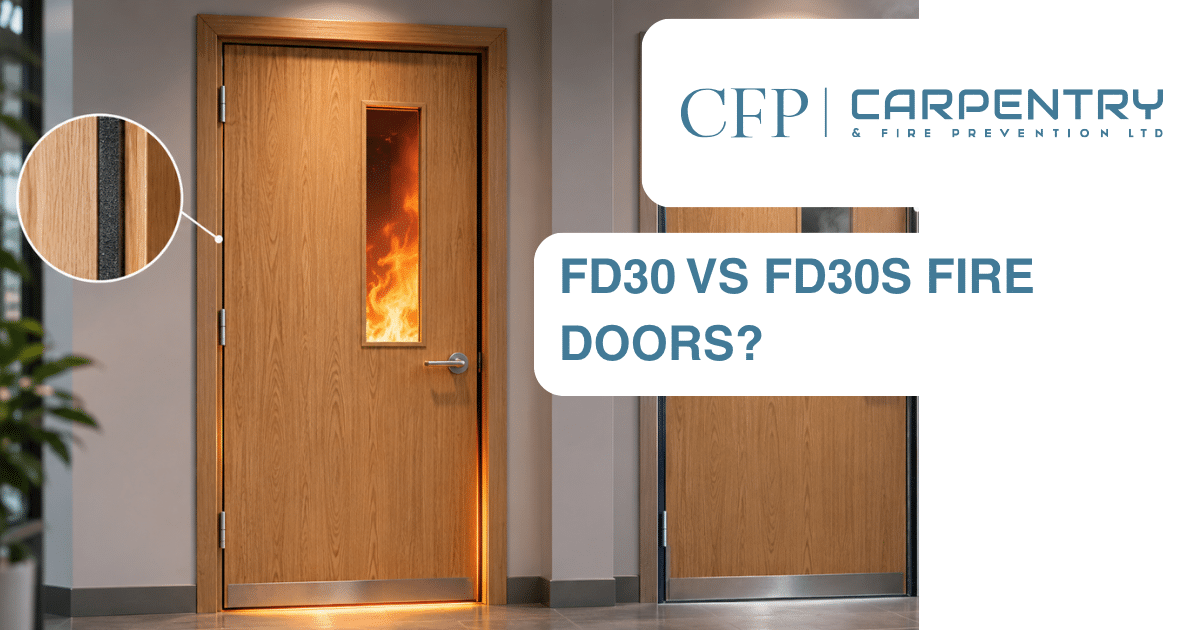
FD30 means the door held back fire for at least thirty minutes under test. The S means it also restricts the spread of cold smoke, which matters enormously because smoke moves faster than flame and incapacitates people long before fire reaches them. Where a fire risk assessment identifies higher risk, or in taller buildings, the specification may rise to FD60S.
The word doorset carries a lot of weight. Certification applies to the leaf, the frame, the intumescent and smoke seals, the hinges and the hardware as a tested combination. A certified door leaf hung in an old frame on the wrong hinges is not a certified fire door, no matter how good the leaf is on its own. This is why you should buy and fit fire doors as complete tested assemblies, and why installation quality matters as much as the product itself.
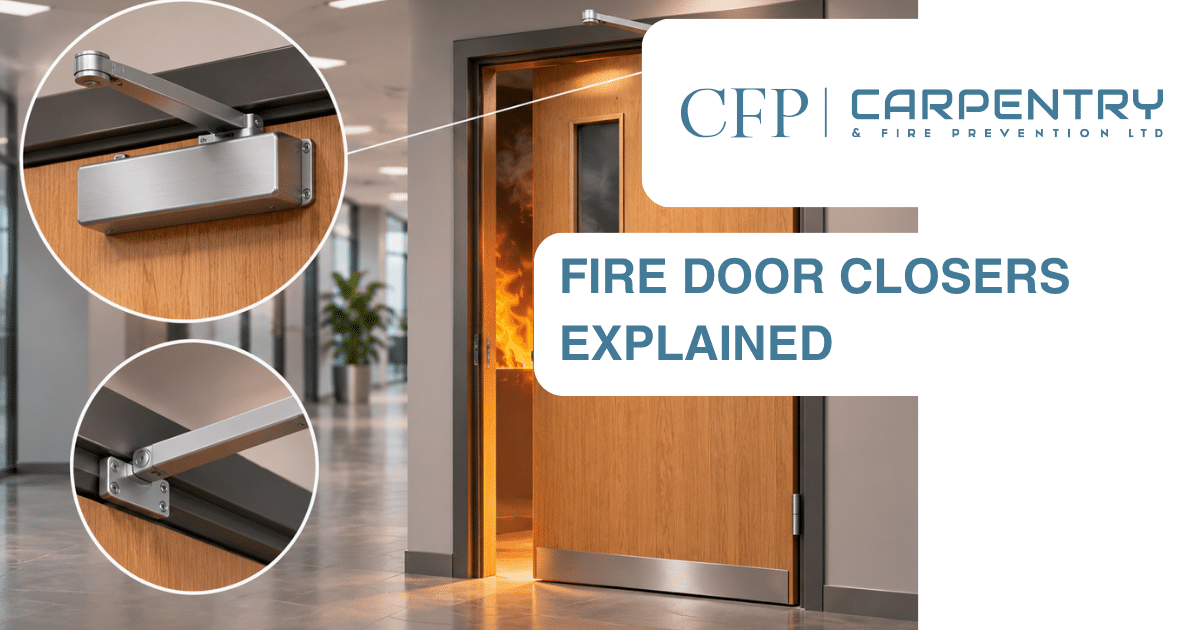
The door also needs a self-closing device that closes and latches it fully from any position. A fire door propped, wedged or fitted with a disconnected closer provides no protection at all.
Where Older Doors Stand
Plenty of blocks still have their original entrance doors, some of them decades old, with no label or certification evidence anywhere on them. The industry usually calls these nominal fire doors, meaning they probably offer some fire resistance based on how somebody built them rather than on any test evidence.
A nominal door is not automatically non-compliant, and it is not automatically acceptable either. Whether it can stay depends on the judgement of a competent fire risk assessor, who will consider its construction, condition, the seals and hardware fitted to it, the height and layout of the building, and the evacuation strategy in place.
Since the Fire Safety Act 2021 confirmed that fire risk assessments must specifically consider flat entrance doors, assessors scrutinise these older doors far more rigorously than they once did. Many blocks that sailed through thirty untroubled years now run replacement programmes.
If you have an original door and nobody has assessed it, that is worth raising with your managing agent rather than waiting.
Alterations That Cause Problems
Fire doors fail as often through modification as through age. The most common problems in flat entrance doors are entirely avoidable.
Cat flaps are the clearest example. Cutting an opening into a certified fire door invalidates its certification outright unless the flap is a tested, fire rated product installed exactly as its test evidence requires, which is rare.
Letterplates cause similar issues. A fire door needs a fire rated letterplate with intumescent lining, and a standard replacement bought from a DIY shop will not perform.
Then there are the smaller ones that add up. Spy holes drilled without fire rated fittings, additional locks cut into the leaf, decorative glazing panels, so many coats of paint that the intumescent strips clog, and self-closers taken off because the door slammed too hard. Each one erodes performance, and several together mean the door will not do what its certificate claims.
If you are a leaseholder, check your lease before altering the door at all. Most freeholders require written approval, and for good reason.
What to Do If Your Door Is Not Compliant
Start by finding out who owns it. Some leases demise the flat entrance door to the leaseholder, others retain it as part of the common parts with replacement funded through the service charge. The lease decides, and it varies enormously between buildings.
Ask your managing agent or freeholder what the fire risk assessment says about flat entrance doors, and whether there is a replacement programme planned. In blocks above 11 metres, ask to see the Regulation 10 check records for your door.
If the door needs replacing and the responsibility is yours, use a certified doorset installed by a competent installer. Fire door performance depends heavily on correct installation, and a good door fitted badly is a poor investment. A professional fire door survey will tell you exactly where your existing door stands before you commit to replacing it.
Frequently Asked Questions
Is it a legal requirement for a flat entrance door to be a fire door?
Where the door opens onto a communal escape route, building regulations guidance and the building’s fire risk assessment will almost always require a fire door, and the responsible person has a legal duty to keep it maintained. The precise requirement comes from the fire risk assessment rather than from a single sentence of statute.
My door has no label. Does that mean it is not a fire door?
Not necessarily. It may be a nominal fire door, believed to offer resistance based on its construction rather than test evidence. Only a competent assessor can tell you whether it is acceptable in your particular building.
Can I fit a cat flap in my flat entrance door?
Almost certainly not without invalidating the door’s fire certification. Fire rated cat flaps exist but are uncommon, and most leases require written approval for any alteration to the entrance door.
Does my flat entrance door need a self-closer?
If it protects a communal escape route, yes. A fire door that does not close and latch by itself offers no protection when it matters.
Who pays to replace a non-compliant flat entrance door?
It depends on the lease. In some blocks the leaseholder pays, while in others the freeholder recovers the cost through the service charge as part of a building wide programme. Check the lease wording and any section 20 consultation notices.
Need Advice on a Flat Entrance Door?
At CFP Carpentry & Fire Prevention, we survey, supply and install certified fire doors for leaseholders, landlords, freeholders and managing agents. If you are unsure whether your flat entrance door meets the standard, we can assess it, tell you plainly where it stands and quote for any work needed.
Our services include:
- Fire door surveys and inspections
- FD30 and FD60 certified doorset installation
- Flat entrance door replacement programmes
- Remedial works and fire stopping
We cover:
- South & South West: Bournemouth, Southampton, Poole, Exeter, Plymouth
- London & South East: London, Guildford, Slough, Croydon
- Midlands & Wider Reach: Bristol, Swindon, Oxford
Get in touch today to arrange a survey or to talk through your flat entrance door.