

The Fire Safety Act 2021 is a short law that changed who answers for some of the most important fire safety features in blocks of flats. It updated the Regulatory Reform (Fire Safety) Order 2005 to make one point clear. In any building with two or more flats, the Order covers the structure, the outside walls and the front doors to each flat.
Before the Fire Safety Act 2021, many building owners and managers saw flat entrance doors as the leaseholder’s business. They also often left outside walls out of the fire risk assessment. The Act closed that gap.
In this guide we explain why the Act was needed and what it changed. We also cover which buildings it applies to, what it means for flat entrance doors in particular, and what responsible persons need to do about it.
Why the Act Was Needed
The Regulatory Reform (Fire Safety) Order 2005 has always covered the shared parts of residential buildings, such as stairs, corridors, lobbies and plant rooms. However, it said far less about the parts in between.
The Grenfell Tower fire in 2017 showed how much that mattered. Both the outside wall system and the flat entrance doors played a central part in how the fire spread and how quickly escape routes became unusable. Yet people genuinely disagreed over whether either one fell within a fire risk assessment under the Order.
So the government brought in the Fire Safety Act 2021 to settle the question. It was the first phase of a wider reform programme. After that came the Fire Safety (England) Regulations 2022 and then the changes the Building Safety Act 2022 made to the Order.
What the Fire Safety Act 2021 Changed
The Act received Royal Assent on 29 April 2021. Its main parts then came into force in England and Wales on 16 May 2022.
Its key change was to make the reach of the Fire Safety Order clear. When a building contains two or more homes, the Order now plainly covers:
- The building’s structure and outside walls, plus anything fixed to them, such as cladding, balconies and windows
- All doors between the individual flats and the shared parts, which in practice means flat entrance doors
As a result, the responsible person must now include all of these in the fire risk assessment. They must also take reasonable steps to manage the risks they find.
The Act did not set up a new way of enforcing the rules, though. Because it works by changing the Order, fire and rescue authorities enforce everything it covers in the same way, with the same powers and penalties.
Which Buildings the Fire Safety Act 2021 Covers
The Act applies to any building in England and Wales with two or more homes in it, and height does not matter. For example, a house split into two flats falls within it just as much as a 20-storey tower.
That wide reach often surprises people. After Grenfell, much of the public debate focused on high-rise blocks. In addition, later duties, such as quarterly fire door checks, only apply above 11 metres. The Fire Safety Act itself, however, has no height limit.
It does not apply inside the individual flats, though. The Order still does not govern what happens within a private home. Instead, it now clearly covers the boundary between that home and the shared parts of the building.
[Image: a mid-rise block of flats with balconies, viewed from street level] Alt text: A mid-rise block of flats with balconies and windows, showing the external walls brought into scope of fire risk assessments by the Fire Safety Act 2021.
What It Means for Flat Entrance Doors
For most managing agents and freeholders, flat entrance doors are where the Act has the biggest practical effect.


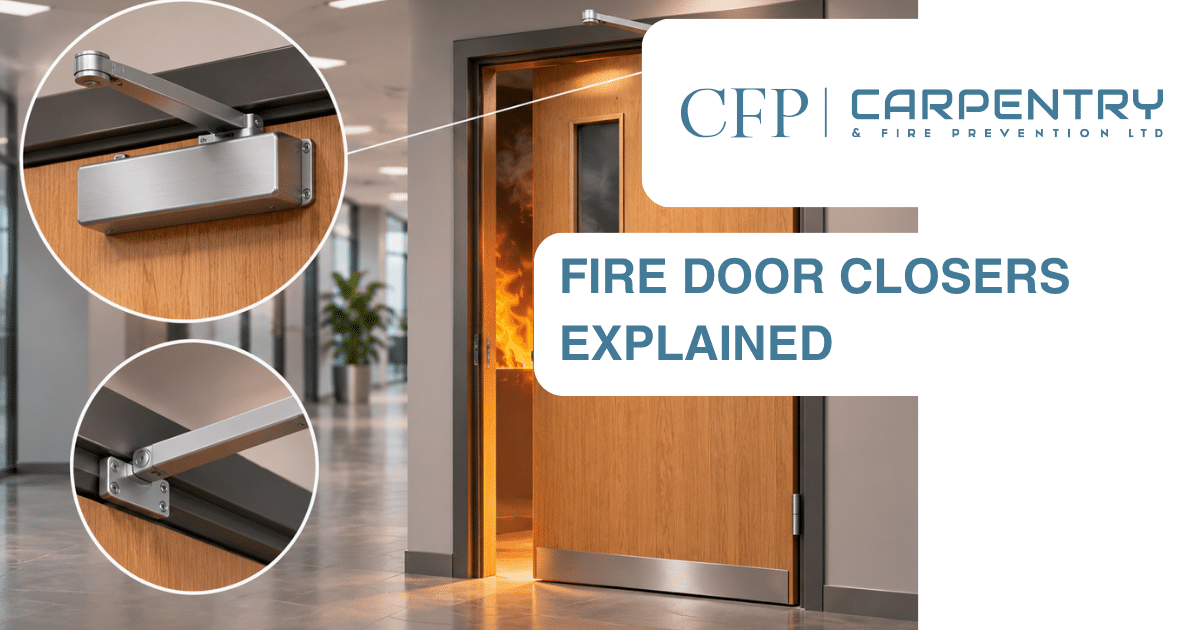
A flat entrance door that opens onto a shared corridor or stair keeps a fire inside the flat where it started. Most residential blocks also rely on a stay put strategy, which assumes exactly that. So if the door fails, the fire and its smoke can reach the escape route everyone else depends on. A missing closer, damaged seals, an unrated replacement or a hole cut for a new letterbox can all cause that failure.
Because of the Fire Safety Act 2021, the responsible person must now assess those doors, even when the lease says the leaseholder owns the door. In practice, ownership and responsibility often sit with different people. A leaseholder may own and have to maintain the door, while the responsible person still has to assess it and act on what they find.
Our guide to who is responsible for fire door inspections in a block of flats explains how that usually works.
Meanwhile, residents and buyers now ask the same questions from the other side.
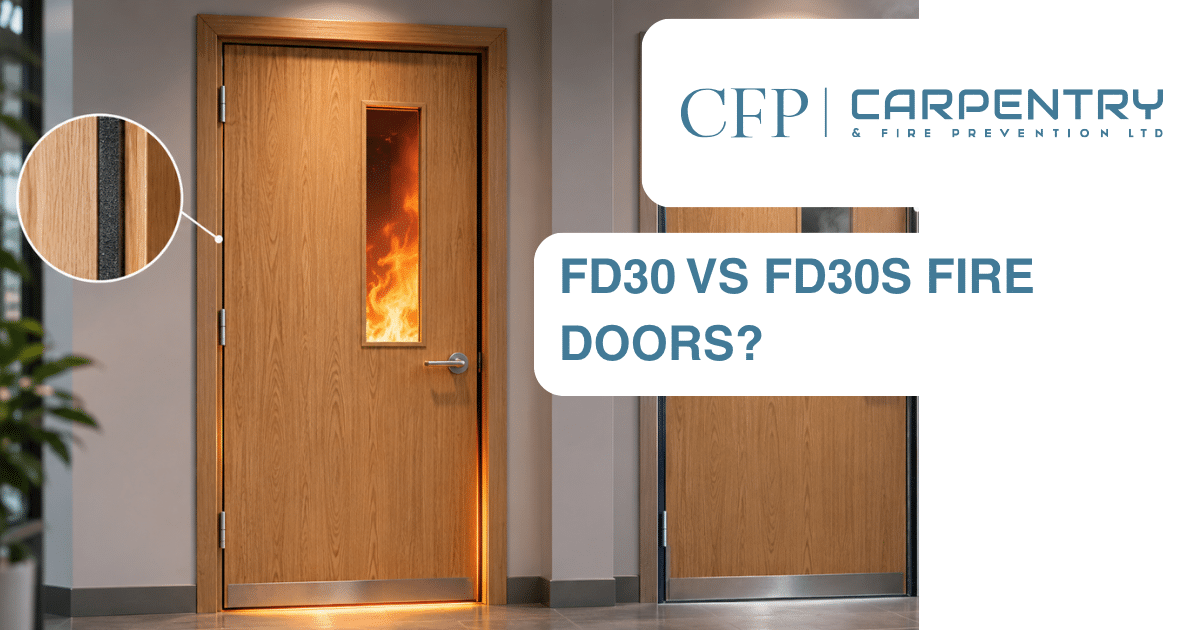
Our articles on whether a flat entrance door needs to be a fire door and how to tell if a flat’s front door is a certified fire door cover what they need to know. Doors also come up often during a sale.
For example, we carried out urgent fire door survey and remedial works for a flat sale in Salisbury for exactly that reason.
What It Means for Outside Walls and Structure
The Fire Safety Act 2021 also requires responsible persons to consider the structure and outside walls in their fire risk assessment. That includes cladding, insulation, balconies, windows and anything fixed to the outside of the building.
First, a fire risk assessor will look at whether the outside wall presents a risk and whether it needs a closer look. If it does, a specialist usually carries out that work using PAS 9980:2022, the code of practice for fire risk checks on outside walls. However, many buildings will not need that level of detail, especially those with masonry walls and nothing combustible fixed to them.
Structure, meanwhile, includes the fire-resisting walls and floors that separate flats from each other and from the shared parts. Pipes and cables often pass through those walls, and poorly sealed gaps around them weaken the compartments the stay put strategy relies on. Fire stopping and compartmentation surveys find these gaps, as in our recent fire stopping surveys across three residential properties in Dorset.
What Responsible Persons Need to Do
If your fire risk assessment dates from before May 2022 and does not cover outside walls and flat entrance doors, you need to review it. To help with this, the government published Fire Safety Act guidance and a tool for deciding which buildings to review first.
In practice, most responsible persons will need to:
- Review the fire risk assessment so it covers structure, outside walls and flat entrance doors
- Find out the type, rating and condition of each flat entrance door
- Agree with leaseholders how to repair or replace doors that fail
- Record what they found and what they did about it
- Keep doors in good order under the ongoing maintenance duty in Article 17 of the Order
A fire risk assessor will usually check a sample of flat entrance doors rather than examine each one in detail. By contrast, a fire door survey inspects every door against its certification, which is why the two work together. Our guide to fire door surveys vs fire risk assessments explains the difference.
How It Fits With the Later Reforms
The Fire Safety Act 2021 set the reach of the rules. The reforms that followed then built new duties on top of it.
First, the Fire Safety (England) Regulations 2022 came into force on 23 January 2023. Among other duties, Regulation 10 requires responsible persons in all blocks of flats with shared parts to give residents fire door information. In buildings over 11 metres, they must also check communal fire doors every three months and flat entrance doors every year. Our guide to how often fire doors in blocks of flats should be inspected covers those timings.
Then, from 1 October 2023, section 156 of the Building Safety Act 2022 strengthened the Order further. Since then, every responsible person must record the full fire risk assessment. They must also give residents information about the fire risks in their building.
Frequently Asked Questions
When did the Fire Safety Act 2021 come into force?
It received Royal Assent on 29 April 2021. Its main parts then came into force in England and Wales on 16 May 2022.
Does the Fire Safety Act 2021 apply to my building?
It applies to any building in England and Wales with two or more homes in it, whatever the height. However, it does not apply inside individual flats.
Does the Act make flat entrance doors the freeholder’s responsibility?
It makes them part of the responsible person’s fire risk assessment. The lease usually decides who pays for and carries out repairs. Even so, the responsible person must assess the doors and act on what they find.
Does the Fire Safety Act 2021 require fire door inspections?
Not by itself. Instead, it brings flat entrance doors within the Fire Safety Order. The specific inspection timings come from Regulation 10 of the Fire Safety (England) Regulations 2022, which applies to buildings over 11 metres.
What happens if I ignore it?
Because the Act changes the Fire Safety Order, enforcement happens under the Order. So fire and rescue authorities can issue enforcement notices, and serious breaches can lead to prosecution, unlimited fines and prison.
Need Help With Flat Entrance Doors?
At CFP Carpentry & Fire Prevention, we survey flat entrance and communal fire doors for freeholders, managing agents and landlords. We then carry out the remedial work and certified replacements that follow. Our door-by-door reports also give you a clear record for your fire risk assessment.
We cover:
- South & South West: Bournemouth, Christchurch, Poole, Southampton, Salisbury, Exeter, Plymouth
- London & South East: London, Guildford, Slough, Croydon
- Midlands & Wider Reach: Bristol, Swindon, Oxford
Get in touch today to arrange a survey of your building’s flat entrance doors.